If you ask three different civil contractors in Udaipur how long it takes to build a home, you will probably get three wildly different answers. One might confidently promise ten months, another will tell you a year and a half, and the third will shrug and say it depends entirely on the marble market and the monsoon. In truth, that third contractor is being the most honest with you.
Trying to pin down a single, universal house construction timeline Udaipur homeowners can set their watches by is a fool’s errand. A home sitting on the hard granite ridges of Bhuwana behaves very differently from one built on the clay-heavy soils near Goverdhan Sagar. Add local building regulations, supply chains, and weather patterns into the mix, and you quickly realise that construction isn’t a factory assembly line. It is a sequence of distinct stages, each tied to the completion of the one before it.
Let’s walk through the actual building journey step by step, so you know what happens, why certain phases stretch out, and where time can slip through your fingers.
Phase One: Design, Approvals, and Procurement
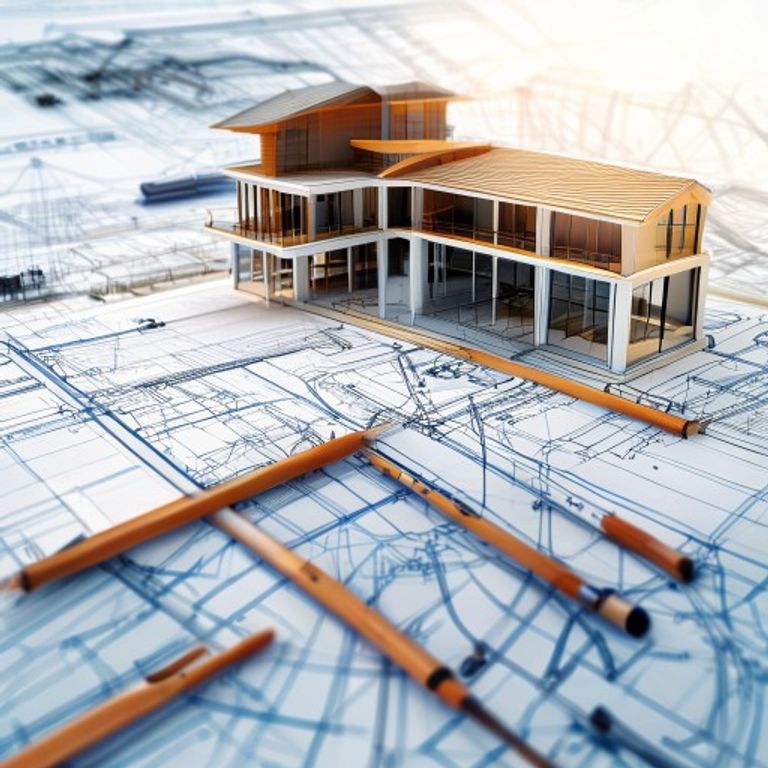
Before an excavator touches your plot, an enormous amount of thinking needs to happen on paper. This is where you work through floor plans, elevations, and structural engineering with your architect. Rushing this stage is the easiest way to cause expensive headaches later. If you change your mind about a bathroom layout after the plumbing conduits are cast into a slab, you lose both weeks of progress and money.
Once your drawings are locked, you enter the approval corridor. In Udaipur, building sanction files pass through the municipal machinery, managed through the Rajasthan Urban Development and Housing Department and the local development authority. Depending on whether your plot is in an approved layout, an old abadi area, or agricultural land needing conversion, this paperwork can take anywhere from a few weeks to several months. You cannot pour a foot of concrete legally until those permissions are stamped.
Simultaneously, you have procurement. If you are ordering specialised steel grades, red brick from Bhilwara, or custom Kota stone slabs, sourcing schedules need alignment with your contractor’s start date. If you haven’t reviewed your budget allocations yet, taking a moment to look over INTERNAL_LINK_1 can save you from unexpected cash crunches mid-stream.
Breaking Ground: Foundation to Structural Shell
Now the site comes alive. The foundation stage begins with excavation, and this is where Udaipur’s geology can play tricks on your schedule. If your plot sits on loose, layered shale or hard stone, your team may need pneumatic rock breakers to reach load-bearing strata. That adds unexpected days right at the start.
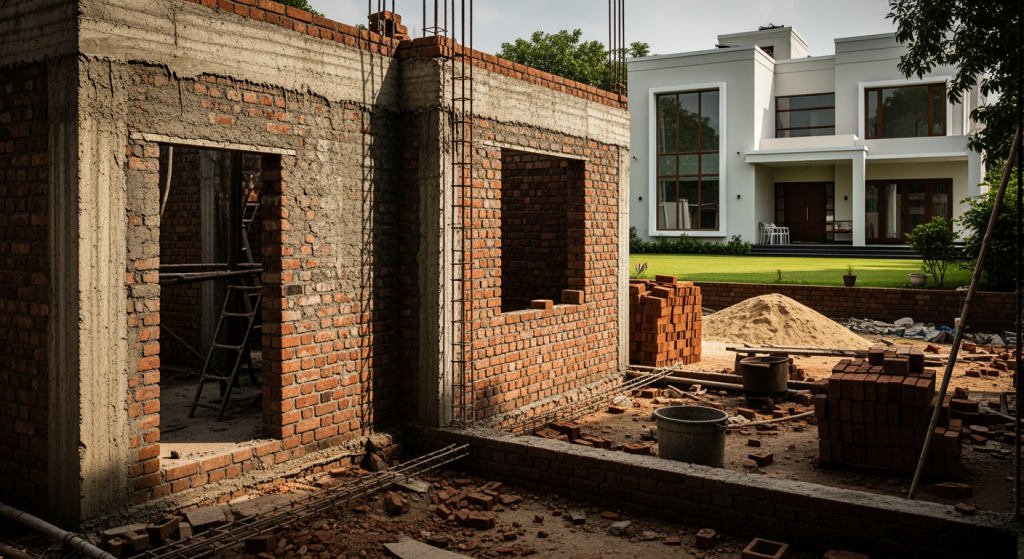
Once the footings and plinth beams are cast, the structural phase—the “grey structure”—takes shape. This involves casting reinforced cement concrete (RCC) columns, laying brickwork, and pouring floor slabs. Each slab requires formwork, rebar tying, pouring, and then mandatory wet curing.
Here is where good science clashes with impatience. The Bureau of Indian Standards specifies under IS 456 that structural concrete must undergo wet curing for a minimum of 7 to 14 days, depending on weather and cement type, to gain its intended structural strength. Anyone telling you they can remove shuttering props and start the next floor in three days is cutting corners with the safety of your family. Each suspended slab and column set requires patience.
The Core Systems: Services, Plastering, and Finishes
Once the skeleton of the building stands tall, progress often feels like it slows to a crawl. The structure goes up visibly fast, but the finishing stages are notoriously detail-heavy. This phase involves three main layers:
- Services (MEP): Mechanical, electrical, and plumbing lines. Conduits are chased into the brickwork, drainage stacks are aligned, and water supply pipes are pressure-tested. A single hidden leak checked too late means tearing open finished masonry.
- Plastering and Waterproofing: Internal and external plaster coats need proper curing. Waterproofing terraces and sunken bathroom slabs cannot be hurried; they need pond testing for several days to guarantee no seepage.
- Finishes: Flooring (whether local Rajnagar white marble or vitrified tiles), door frames, window fabrications, joinery, and the primer coats of paint.
Coordination here is an intricate dance. The tile layer cannot work until the plumber finishes; the painter cannot put down coats while the carpenter is kicking up sawdust. For a closer look at managing these trade handovers smoothly, read through INTERNAL_LINK_2.
What Actually Shifts Your Schedule in Udaipur?
Even with careful planning, unexpected factors will cause delays. A joint study published by the Royal Institution of Chartered Surveyors (RICS) and real estate bodies showed that over 60% of residential projects in India face timing shifts due to external and supply-chain variables. In Udaipur, a few specific elements tend to push timelines out:
1. The Monsoon: Between July and September, southern Rajasthan experiences spells of heavy rainfall. External plastering, terrace waterproofing, and deep excavation usually ground to a halt during wet spells to protect work quality.
2. Festival and Harvest Migration: A large portion of the skilled masonry and helper workforce in Udaipur hails from surrounding rural belts like Gogunda, Jhadol, and neighbouring border districts. During Diwali, Holi, and the peak crop-harvesting seasons, building sites run on skeleton crews for weeks at a time.
3. Custom Material Sourcing: Udaipur is famed for its natural stone, but waiting on matching lots of marble, bespoke ironmongery, or custom UPVC glazing units often stretches the handover stage.
The Final Handover
The last stage is not simply sweeping the floors and turning the key. It includes deep cleaning, snagging (fixing small plaster cracks, testing every switchboard, verifying drain slopes), and securing water and power connections from local utilities. Rushing through your snag list just to move in on an auspicious date usually leaves you dealing with minor defects for the next two years.
Treat your construction journey as an interconnected process rather than an arbitrary race against the calendar. When you respect the curing times, anticipate local weather, and give each trade the room they need to do their jobs properly, you end up with a home that stands strong for generations.