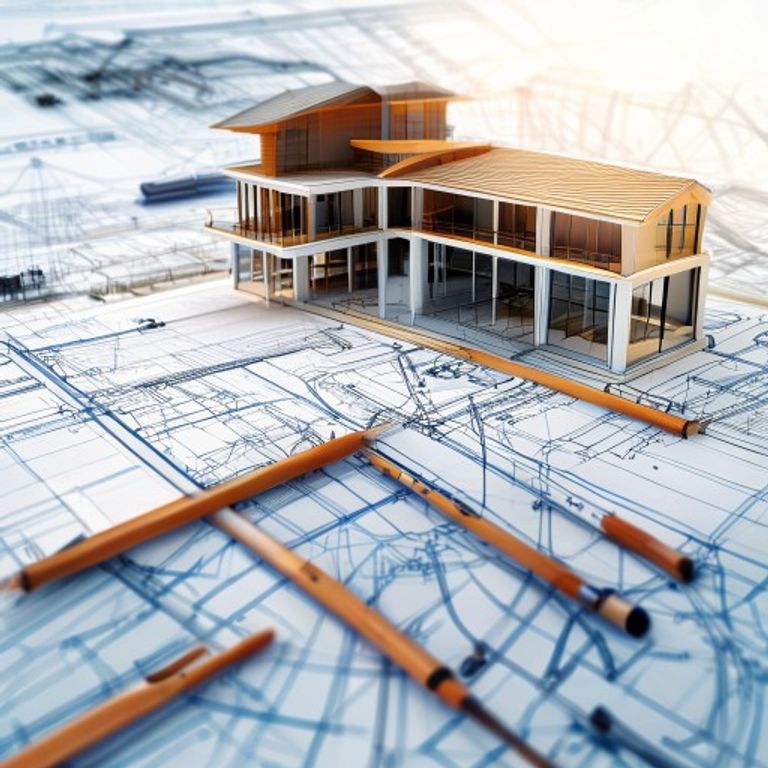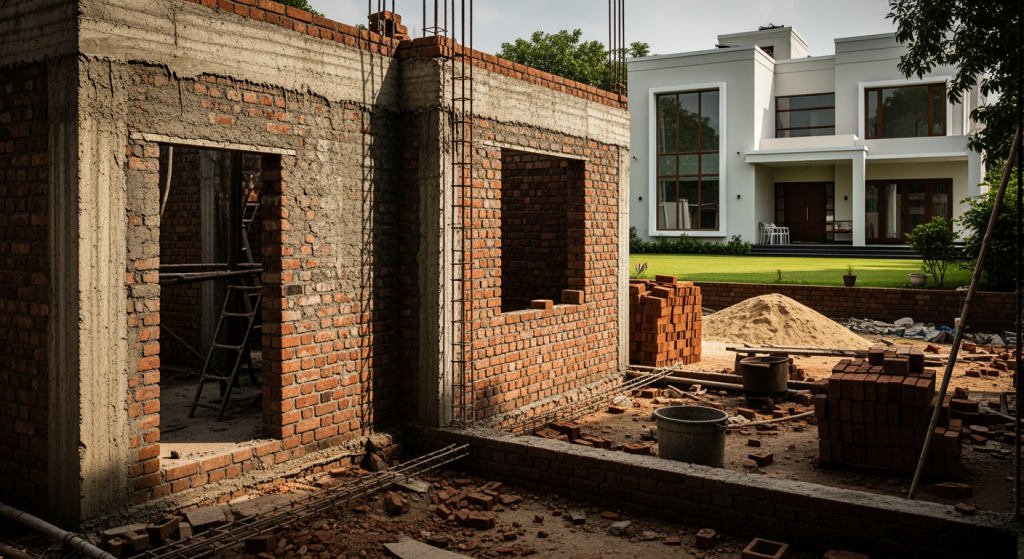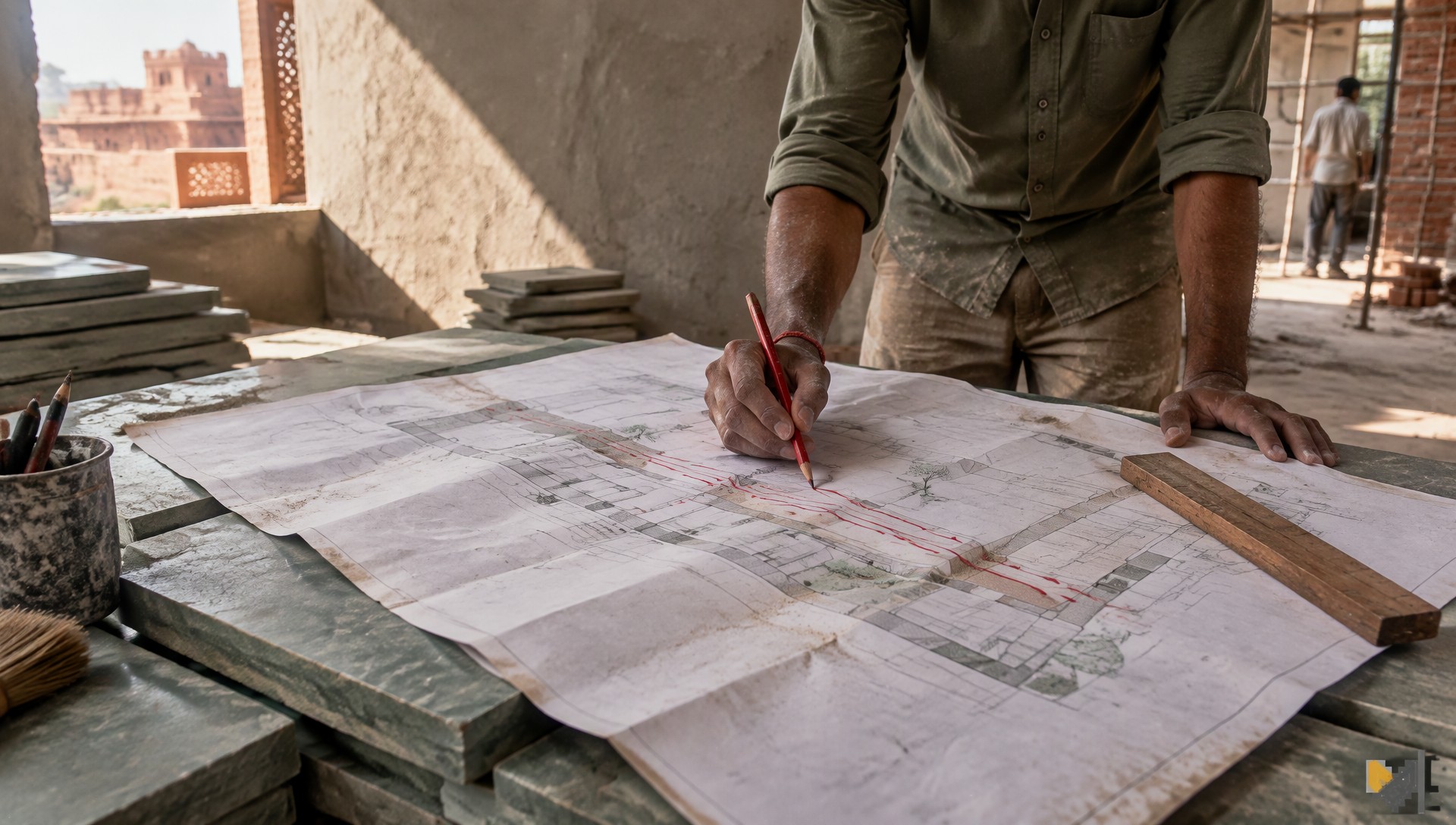
If you have ever stood on a bare plot of land in Ahmedabad around late May, you already know the first rule of local architecture: the sun takes no prisoners. Temperatures routinely push past 44 degrees Celsius, the air feels like a blowdryer, and by late afternoon, any exposed concrete slab radiates heat like a tandoor. Yet, walk into a traditional pol house in the old city, and you will notice something remarkable. It feels noticeably cooler, calmer, and shaded, all without a battery of humming air conditioners.
When people talk to me about modern house design Ahmedabad homeowners often fall into the trap of pinning images of glass-heavy villas from California or Scandinavia to their mood boards. Those designs look stunning in photographs, but transplanting them to our dry, semi-arid climate usually results in astronomical power bills and rooms that remain unusable for half the day. Designing a contemporary home here isn’t about ditching modern aesthetics—it is about making sensible, climate-responsive decisions right from the drawing board.
Working With the Sun Instead of Fighting It
The single most important decision you will make happens before a single brick is laid: how your building sits on the land. Getting your orientation right costs nothing extra during planning, but trying to fix poor orientation later with curtains and heavy air conditioning will cost you for decades.
In Ahmedabad, you want to open up your home toward the north and protect it vigorously from the west and south-west. Glass on the north side brings in soft, glare-free daylight throughout the day without the punishing heat gain. On the other hand, western walls bear the brunt of the harsh late-afternoon sun. If you put large bedroom windows on a west-facing facade, that room will store heat and radiate it back inside well into midnight.
This is where smart shading comes into play. Deep overhangs, cantilevered balconies, and modern interpretations of traditional jalis are life-savers. Researchers at the Center for Advanced Research in Building Science and Energy at CEPT University have shown that properly designed external shading devices can cut peak cooling loads by more than twenty percent in our region. When the sun never hits the glass in the first place, your indoor climate changes completely. If you are exploring site layouts, take a look at our guide on INTERNAL_LINK_1 to see how structural planning affects daily living.
Layout, Zoning, and the Art of Urban Privacy
How you arrange your spaces indoors—what architects call zoning—shapes how your home functions from morning to night. Think about your daily rhythm. You probably want your breakfast area or kitchen to catch early eastern light, while quiet bedrooms should ideally sit away from harsh afternoon sun and street noise.
Zoning also helps you manage energy. Grouping spaces that require cooling together allows you to seal off zones efficiently. A double-height living room looks magnificent, but if it opens directly into bedrooms without any thermal breaks, your AC units will run ragged trying to cool thousands of cubic feet of rising warm air.
Then comes privacy, which is a major factor in Ahmedabad’s dense residential pockets like Bodakdev, Paldi, or South Bopal. We want natural light and fresh air, but we do not necessarily want the neighbours watching us have morning tea. Modern layouts solve this by looking inward. Incorporating an internal courtyard, a light well, or a landscaped sunken court allows you to keep exterior perimeter windows modest while still flooding the core of the house with sunlight.
Cross-ventilation is equally practical, especially during the humid transition months of August and September. Placing window openings on opposite walls catches prevailing breezes, but it requires thoughtful placement so you invite airflow without pulling in airborne dust from nearby construction.
Selecting Finishes That Can Handle the Heat
Ahmedabad is tough on materials. Between blinding summer glare, dust storms in June, and brief but intense monsoon downpours, delicate finishes fade or crack in no time.
When selecting flooring and wall finishes, look for materials with good thermal mass and natural textures. Honed Kota stone, local sandstones, and terrazzo have stood the test of time here for good reason: they stay wonderfully cool underfoot. If you prefer contemporary porcelain tiles, choose matte finishes in neutral, earthy tones rather than high-gloss pure white, which can create blinding glare in sunlit rooms.
For exteriors, avoid dark paint schemes that absorb thermal energy. Breathable lime-based plasters, terracotta cladding, and exposed brickwork age gracefully and reflect heat far better than synthetic external wall paints. You can learn more about balancing interior materials by visiting INTERNAL_LINK_2.
Every Site Tells Its Own Story
It is easy to read design principles online and feel ready to sketch your floor plan, but here is the honest truth: no two plots are identical. A 300-square-yard corner plot facing a busy road in Satellite requires a completely different approach than a narrow, north-facing plot tucked inside a quiet gated community off SG Highway.
Local municipal rules, like the ground coverage and setback norms mandated by the Ahmedabad Urban Development Authority, directly dictate where your building can sit and how tall it can rise. Soil conditions, neighbouring structures that cast shade, and even the angle of the street outside will steer practical choices around window placement, acoustic buffers, and drainage.
A modern home in our city should not just look contemporary on day one; it needs to stay comfortable, low-maintenance, and easy to run ten years down the road. Sit down with a qualified architect who understands local microclimates, study how light moves across your specific plot, and design a space built to thrive in the Ahmedabad heat.