If you have ever stepped out of the 45-degree midday sun in Jodhpur into the shaded central courtyard of an old stone haveli, you know that immediate drop in temperature feels like magic. It is not magic, of course. It is centuries of trial, error, and sheer survival instinct carved into yellow sandstone. Fast-forward an hour down the highway toward a newly developed gated community on Jaipur’s outskirts, and you will see sleek, minimalist white boxes with floor-to-ceiling glass facades. Both look striking in their own right, but they offer completely different ways of living.
When planning a home here, the debate around traditional vs modern house design Rajasthan often gets boiled down to pure aesthetics. People argue over whether you want your house to look like a heritage resort or an art gallery. But having tracked housing trends across northern India for over a decade, I have found that how a home looks is only half the story. The real conversation belongs to how that home lives with you through dust storms, blistering pre-monsoon heat, and bone-chilling desert winters.
Layout, Materials, and the Battle Against Summer Heat
Traditional Rajasthani architecture was never built to impress passersby on the street; it was designed around inward-facing family life. Homes were arranged around central courtyards, known locally as the chowk, which acted as natural cooling chimneys. Hot air rises and escapes through the open roof, pulling cooler air from ground-level rooms. Thick sandstone or brick masonry walls, often insulated with lime (chuna) plaster, created immense thermal mass. Heat from the afternoon sun takes ten to twelve hours to soak through a 45-centimetre stone wall, meaning the heat only reaches the interior when outside temperatures have already dropped for the night.
Modern homes, on the other hand, prioritize extroverted layouts. You get open-plan living rooms, sprawling outdoor decks, and picture windows designed to draw natural light into every corner. These layouts feel airy and wonderfully connected. The trade-off in our climate, though, is heat gain. Reinforced cement concrete (RCC) frames paired with standard brick or lightweight concrete blocks transfer external temperatures indoors remarkably fast.
A landmark study on vernacular architecture by researchers at CEPT University highlighted that unconditioned traditional courtyard dwellings in arid western India maintain indoor temperatures 5 to 7 degrees Celsius lower than modern concrete structures during peak summer afternoons. The Bureau of Energy Efficiency has increasingly pushed for strict compliance with the Energy Conservation Building Code for residential builds, pointing out that unchecked window areas in arid regions drive electricity usage through the roof. If you choose an open-concept modern layout with expansive glazing, you have to counter the solar radiation with high-performance double glazing, deep overhangs, or simply accept running three air conditioners round the clock.
Detailing, Maintenance, and the Budget Reality
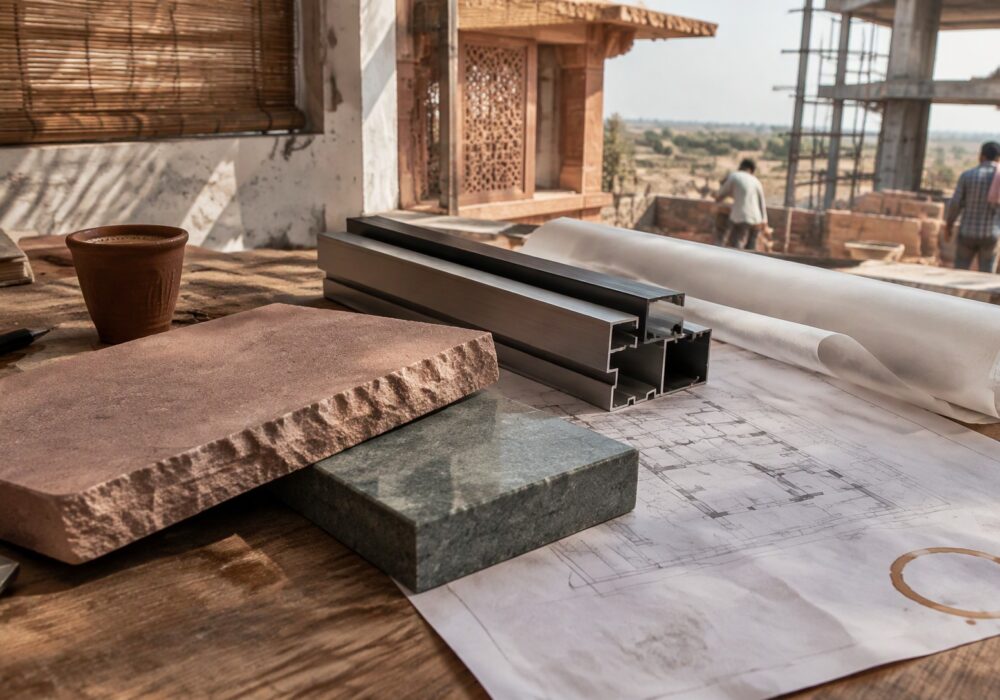
Let us talk about craftsmanship and your wallet. Traditional detailing in Rajasthan is spectacular. Think of hand-carved stone jalis (lattice screens) that break direct sunlight into dappled shade while speeding up passing breezes through the Venturi effect. Consider chhajjas (cantilevered eaves) and stone brackets that protect exterior walls from rain streaks and sun damage. However, building like this today is not cheap, nor is it fast. Finding skilled karigars (artisans) who can carve local Makrana marble or Dholpur sandstone has become remarkably difficult, and their specialized labour adds months to a construction timeline.
Modern architectural detailing leans toward clean lines, shadow grooves, and prefabricated components like powder-coated aluminium frames and large-format porcelain tiles. It is generally faster to build, easier to inspect, and readily sourced from regional suppliers. If you are comparing your preliminary construction estimates, explore our breakdown on INTERNAL_LINK_1 to understand how structural material choices influence long-term property equity.
Maintenance brings its own surprises. Many people assume traditional materials require constant upkeep, but lime plaster actually absorbs carbon dioxide and hardens over time, requiring far fewer paint touch-ups than modern exterior acrylic emulsions that bake and peel under intense desert UV rays. That said, cleaning intricate stone carvings after an aandhi (dust storm) takes far more elbow grease than wiping down a flat pane of toughened glass.
Bridging the Divide: Exploring a Hybrid Design
You do not have to pick an extreme side. In fact, some of the most livable homes built in Udaipur, Jodhpur, and Jaipur today treat this choice not as an either-or decision, but as a conversation between local climate intelligence and contemporary comfort.
What does a hybrid look like in practice? Consider these practical combinations:
- A modern structural core wrapped in local stone: You can build with standard RCC framing for open, flexible room sizes, but sheath your sun-facing western and southern facades in local sandstone with a ventilated air gap behind it.
- Reinventing the courtyard: Instead of an open dirt or stone patio, build an enclosed, skylit atrium featuring remote-controlled motorized louvers at the ceiling level to flush hot air out during summer evenings.
- Modernized jalis: Use laser-cut metal or dry-pressed terracotta screens that echo the geometric beauty of historic jalis without requiring months of manual stone chipping.
Before finalizing any layout, always review local municipal bylaws. Bodies like the Jaipur Development Authority mandate specific ground coverage limits, front setbacks, and rainwater harvesting structures that will naturally shape your floor plan whether you lean heritage or minimalist. For more design strategies tailored specifically to desert plots, check out our guide on INTERNAL_LINK_2.
Making the Choice That Fits You
Style remains deeply personal. If your heart is set on the serene, uncluttered aesthetic of Scandinavian or Japanese minimalism, building a faux-haveli will only leave you frustrated. Similarly, if you love the tactile warmth of handcrafted stone and the nostalgic echo of a family courtyard, a sterile glass cube will never feel like home.
Neither approach is morally superior. Traditional design holds a masterclass in thermal comfort and vernacular identity, while modern architecture gives us functional flow, light-filled rooms, and structural efficiency. The happiest homeowners I meet in Rajasthan are those who borrow the best lessons from both: respecting the harsh desert climate on the outside, while creating a home inside that fits how their family actually lives today.